Showing posts with label music. Show all posts

23.12.16

Connected cows and the greener pastures of big data

Blog post originally published on State of Digital as part of a monthly column.

cedric chambaz bing microsoft connected cows
Remember the cringing router sound that accompanied your early internet connections? Being a 40-year old father of two, when I hear that screeeeeeeechhhhhhhhhh I can’t avoid feeling a smile pop on my face. That sound reminds me, with a touch of nostalgia, of the cry of a newborn. It makes me smile as fond memories have overshadowed the dirty nappies and sleepless nights.

To a certain extent, that sound was indeed the cry of a baby internet, when browsing was a commitment and a flaming logo the pinnacle of creativity. The worldwide web has since grown up. A lot.

Small steps towards big data

Looking back, that dial-up buzz was literally the first signal in our digital footprint. We signed on. And in that very moment big data spun to life.
What were we learning from those early signals? Not much. We knew how many people were online and roughly where they were. But as the web of documents developed, search engines arose and our ability to understand people increased. We started to know what you wanted. Think about it: you probably tell search engines things you wouldn’t tell your closest friends. We understood that your inputs into a search engine were, on a personal level, an expression of your desire, and on a global level, an expression of the world’s consciousness. The so-called Zeitgeist.

Although I have spent the last 10 years in the realm of online advertising, in today’s article I will focus less on search marketing, and more on the information infrastructure and machine learning that Bing is part of, looking at how this is influencing our future. What are we doing with our data footprint? Over the course of the last year I have asked many people across Europe how the idea of data collection made them feel. By large, the response was discomfort and hesitance. Until provided with more perspective.

The heights of data complexity

So let’s get back to our story. In order to understand the complexity and depth of the data infrastructure that we are part of, let’s contemplate what has changed since the emergence of the first search engines. With each of these four changes and associated amount of data surge that came with it, you need to visualize a growing mountain.
First is your search habit. From a few searches per day to multiple searches per hour, we are now searching constantly, and not just you but also the billions of people who got online in the recent decade.

Second is your search access. Most of us had access to a desktop computer 20 years ago. But just one. A grey, cold box, sealed to a desk. We certainly couldn’t put it in our pocket and take it with us to a party. It is not just computers, think about all the devices you own which are harnessing computing power: laptop, tablet, smartphones, TV, but also your car and now your fridge.

The third big change is your search expression. You have gone from using basic computer commands, with amp signs and inverted commas, to using more human a language. You’ve gone from asking “what” to asking “why…” and “how to…”. In fact we have seen the growth of queries starting by Why being three-fold the growth of What queries, which means we are no longer looking for information, we are looking for answers. You’ve layered sequential searches on top of these, in a complex web of intents.

Finally, the integration of search with other infrastructures has also changed. A search engine used to be an isolated service. Now it’s plugged into the social graph. This means that several points of contact are linked and with them a flurry of new signals, millions of them that only a few super-computers are able to capture, organize, model and render. Search engines are the database of intents, and social networks are the depository of sentiments. We have developed the ability to process, analyze and understand these two humongous, historical and real-time information sets together.

The search crystal ball

We can understand your sentiment for certain events or entities, estimate popularity trends, as well as predict outcomes of future events. Microsoft has developed a program called Bing Predicts which combines and models all the data signals we can find, and comes up with incredibly accurate predictions. We initially explored popularity-based contests like American Idol, for which the web and social signals are very strong and highly correlate with popularity voting patterns. Bing Predicts could accurately project who would be eliminated each week during American Idol and who the eventual winner would be. Just by using all of the signals that are out there.

Getting more complex, we turned to sporting events and even world political challenges. During the World Cup in Brazil, our team predicted accurately with 100% accuracy the winners of the final elimination round. During the last year Rugby World cup, we had 80% accuracy across the tournament. Surprised? In order to successfully predict a sporting event outcome, the number and type of signals we incorporated quadrupled from what we used to predict a basic popularity event like American Idol. This is because we recognize that popularity alone does not predict whether a team will win – Sorry for the fans. A fan base has however special insights into the abilities of their teams, and those fans are having constant discussions about their team. This is called the Insider Knowledge. We up-weighted their knowledge against player and team stats, tournament trends, game history, location and even weather conditions. This is how we were successful in our predictions.

We finally turned our attention to political events, and in particular the Scottish referendum two years ago. The process and results were presented at TEDxSuzhou.


We were and are predicting the future. Can you imagine a business need that this kind of prediction can answer? Of course you can! We’re experimenting right now with predicting the upcoming trends in fashion, in automobile, in technology – so we can help our advertisers make smarter business decisions.

So we saw how predictions can play a role in entertainment, sport or business, fine. Fine, until we find a way to make this kind of data infrastructure even more meaningful, at a society and mankind level. What can we do with this capability that goes beyond entertainment and the novelty factor? Can we use our big data to make a meaningful impact on society?

Up close

All of this is exciting on a global or country level. When we’re talking about millions of inputs, it’s no wonder you can make predictions and have an impact like this. It is just a massive sample size. What about bringing this big data infrastructure to a personal level? Is it possible for a machine to learn so much about you that it can accurately predict your next move? Or predict when you will need something, and provide it? That is the promise behind digital personal assistant like Cortana.
Cortana is not only on Windows Phone but also Android and iPhone. And since the release of Windows 10, she’s even on your desktop. As outlined in a previous article, you set up Cortana with some basic info about yourself, then use her to help you with things like scheduling and reminders and web searches. Before you know it, Cortana is spontaneously sending you an alert to inform you that you should leave the office now to be on time for your next appointment in Farringdon, because she found some congestion on your normal route. It doesn’t take Cortana long to learn so much about you that she can predict your next move and offer assistance.

A new layer of data in your coat

While our mobile phones aren’t exactly wearables, we sometimes behave as if they are, keeping them on our body no matter where we go. With wearables, two important things converge: big data infrastructure and your expectations.

When you hear “wearables”, you probably think of a smart watch or one of these fitness bands. But to go back to my introductory analogy, these are just the first baby steps towards the full potential of wearable and how that technology will be able to enhance our capabilities, as individuals or as professionals. Think about it: wearables can capture and communicate signals about your location, your manner of travel – whether you’re on foot or in a car – time of day, most recent queries, usual route home from work, the weather, your physiological state, etc.

So for instance, if your wearable identifies that your hydration is low, it could prompt a notification that factors in your location, whether you’re moving, what time of day it is and therefore whether the nearby branch of your favourite coffee shop is open. It could even cross-reference this with your earlier interest in gingerbread lattes, and the fact that it is raining, and direct you to the nearest open coffee shop with plenty of indoor seating and gingerbread lattes on the holiday menu. Your wearable might even send you an alert for a coupon the coffee shop is offering.

Greener pastures ahead

As the wearable technology grows, your expectations for your experience with technology in general will change. And that is for the better. After all what the point accumulating data points like hoarders unless you do something greater about it. And if I have learned something about the internet, is that it is a fertile ground for creative usage of untapped opportunities.
Bing Cedric Chambaz Connected Cows
I am from the French Alps where I spent most of my summers walking the mountains with my grandmother. She used to herd cattle in these alpine pastures and she was telling me stories about how much each of her cows were almost like members of her family. They had names, and she could tell when something was wrong with any of them.
These days are gone. Nowadays a farm is no longer taking care of a small dozens of cows, but hundreds. The personal relationship of each animal is no longer an option. The story of the connected cows started with a farmer in Japan who was exhausted with the effort of figuring out the exact time his cows were fertile – because it is a very short window, only 12-18 hours every 21 days, and it happens usually between 10pm and 8am. Of course knowing this precise time of estrus would give farmers a chance to successfully inseminate the cows.

These are farms with hundreds of cows – you can image what a nightmare this would be to keep track. Could technology help? A farmer in Japan asked Fujitsu for help. Fujitsu consulted with some university researchers and they came up with this idea of putting wearables – pedometers – on the cows, and providing the data to Microsoft Azure, in the cloud, for analysis and alerts that go straight to the farmer’s smartphone.

It turns out that when a cow is in estrus, she paces. The number of steps she is taking increases tremendously, and this data alerts the farmer to the right moment for fertilization. The connected cow project has been 95% accurate – and that 5% where it misses the mark turns out to be when the cow actually skips the farm and goes missing.
Not only is this wearable incredibly accurate, it also helped the researches discover that there is an optimum window for fertilization if you’d like a female or if you’d like a male. With 70% probability, a farmer should fertilize in the first half of the estrus window if he needs more milk cows or if he needs more bulls. But it does not stop there… The Fujitsu researchers were able to also correlate pacing patterns with increased risks of genetic diseases and pathology.


It is amazing what data can tell you, if you know how to look at it. Sometimes creatively! This is the joy of data infrastructure. We can do wonderful things in the world when we collect, analyze and render the data that’s available to us. Microsoft is on the leading edge of this, with products like Power BI, Azure, our cloud platform but also Bing our search engine and its machine learning capabilities which can make sense of the millions other data points that come together to make big data smart, useful, creative and – yes – joyful. And you, what was the last time you found a creative inspiration in your data set?

11.9.14

A mountain dweller in the Asian valleys

What a summer! A few months back I mentioned that I was taking some new responsibilities at work, and that despite that extended mission, I intended to write more often on that blog about my encounters, my surprises, etc. But fact is that in the last two months, I have been on the road, living these cultural differences without having the opportunity to jot down a few thoughts. 8 countries in two months… From public speaking at the National Library in Vienna to listening to a private concert of Lady Gaga in the Centennial Olympic Park of Atlanta during a business conference, from hugging koalas in Australia to surviving taxi rides in Taipei… I have experienced a few things worth capturing, especially in the Asia Pacific region most recently.


Asia Pacific is a conglomerate of diverse countries, cultures, people, nations, etc. And there are many ways to go around. Long ago I lived in Singapore where I was working in a regional capacity which allowed me to grasps some of the complexity and nuances required to deal with the inhabitants of the region. I also toured a few countries from the South East Asian peninsula and around (Burma, Thailand, Malaysia, Honk Kong or Macao and later Japan), which was a favourable ground to get ready for the cultural disparities to be encountered this time around. For this trip, I had decided to move North, which also meant moving from West to East from a cultural perspective. At least that was the assumption when embarking.

East meets far West?

Many tourists try to find commonalities between what they discover and what they experienced in the past. Between the known and the unknown. At a time when Scotland is discussing its independence from the United Kingdom, it was interesting to look at Australia with the eyes of a London-based person. As such, I could not refrain from wondering if this big English-speaking country would nowadays be more similar to the UK, or to let's say to the US. The history would lead us to think towards the earlier, but the economic neo-colonialism would most likely tilt the scale the other way. Originally, I was convinced that the famous Aussie bum would be sat between two chairs, as the French say, but I was to be proven wrong. Australia is not where East meets Far West.

Looking at a GPS, you could feel like driving across British counties... Most of the Australian cities are trademark infringements, tributes from the colons to their origins. As such you drive around many glorious (well rarely so) cities of good old England. Fulham, Ipswich, Chiswick... And you also drive through these towns on the left side of the road, which is right side for Brits and other folks who did not fall under Napoleon's influence back then. On the other hand, the scale of things are more American-like. Bigger than life some would say. For instance, as far as I recall, I had never seen a road sign pointing me in a direction with a 4-digit distance. And that was a "close-by" destination by the local standards! Cars too are disproportionately big, making any European SUV feels like a Fiat 500 on the local highways and that is understandable when you consider the size of the road kills they have to face: Wallabies or Wombats are "slightly" more sizable obstacle than the average field mouse.

Everything is bigger or greater here, but not in the same self-proclaiming way that their American cousins do. They may have a Great Barrier Reef, but no sign of superlatives here and let's face it this reef is totally Great. So it deserves its attribute. But otherwise no Biggest, Largest, Greatest, Awesomest... This country has inherited from its former dominion a sense of restraint. Australia may have Dollars, cowboys, ranches, great outdoors, surfers, skyscrapers, etc. but it retained a tuned down attitude. To its advantage. It also has tea, cricket and rugby but it retained its laidback attitude. To its advantage again. In essence Australia is a mix of many influences, stirred and blended in a melting pot that pays tribute to its relatively new modern history of immigrations. And frankly, when I saw the following sign in a supermarket, I could not avoid but thinking that it could be a good idea:


Obedience and influences

But I had to move North, going deeper in the Asian culture. Singapore, Taipei and then Shanghai were on the agenda.

To conclude on foreign influences, let me kill another myth. My knowledge about China is patchy - at best. To my excuse, this may be the Empire of the Middle, but it truly is peripheral to our western educational curriculum... Just look at a European or American world map: it is hard to say that China is front and centre. So when I arrived in Taipei, I assumed that the relatively recent Taiwanese secession under Chang Kai-Shek would imply a strong, reminiscent influence of Mainland China from a linguistic, cultural and economical stand points. But as I walked the streets of the capital, it felt strangely familiar. I had never been to Taiwan, let alone China, and I could not put my finger on it until I exchanged with my local colleagues. Taiwan is not looking to the East for inspiration. Its influences lays further west: Japan. Probably inherited from the former Japanese occupation, but also by the desire to cut bridges with their immediate cousins, Taipei shows many signs of Japanese influence. Anime, Manga, Sushi bars, shiatsu massage and other Mos Burgers... are just a few hints at my shared interest for Japan with this nation. Japan happens to also be the #1 travel destination for locals.


Alien appeal

I guess we all find in the unknown an exotic appeal and get drawn to it. Actually even the local vermin may look pretty exciting to the new comers. For example, I could not refrain myself from taking pictures of the Cockatoo who landed on my balcony, before realising there were dozens of them rampaging the resort we were staying at. In Australian cities, kiwis can be seen as the local pigeons and consequently do not catch the eye of anyone else but the tourists. I guess they are like the London squirrels, the Venice pigeons, the Parisian mimes or the Dutch on the French Riviera... An attractions that the visitors are happy to benefit from briefly, but that they also keen to rapidly forget.

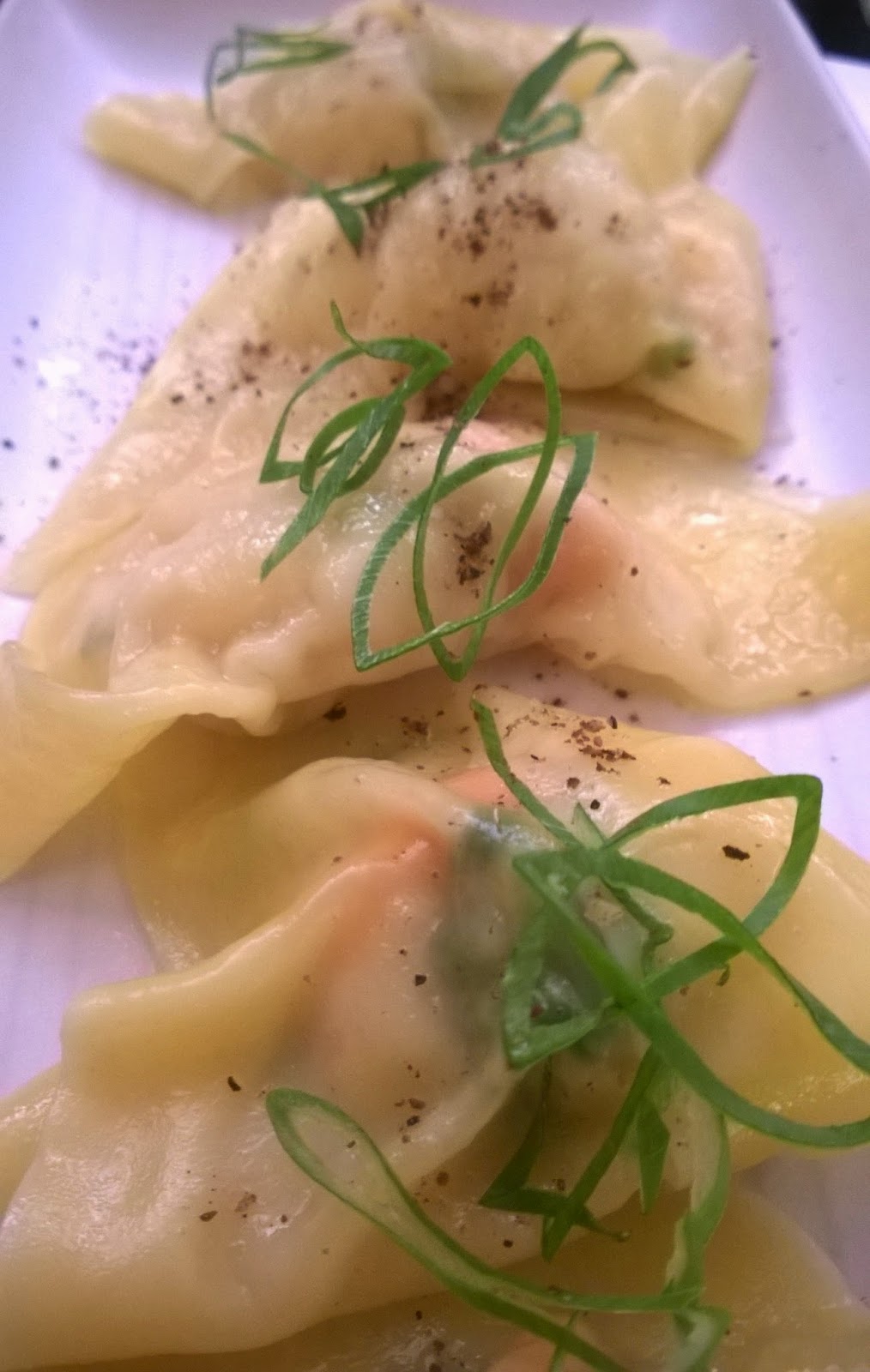
But let's face it, every country has its specialities, good or bad. As a foodie I explored there culinary portfolios and was lucky to be truly treated by my friends with great local food experiences. From the Taiwanese bubble tea to the bush-style dampers, from the Singaporean Ice Kacang to the Chinese dumplings, from the more sophisticated Kumqwat crème brulee to the somewhat puzzling sweet dried meats, jelly fishes or Black Pepper Crabs... I have been indulging every bit of the way the delicacies of this region. A time I felt more like a Gulp Trotter:


Marche a l'Ombre

There are then these little adjustments that you need to make.

As a sun-deprived person from London, this tour between the equator and the tropics was a blessing. The opportunity to recharge my Vitamin D batteries which have been running low for... let's face it 8 good years. But I suppose that when you are living there, the sun is more a foe than a friend. The sun is there merciless. It is scorching hot, and for people who enjoy pale skins, you may need serious protection if you do not want to look like an Italian vanilla/strawberry gelato. As a matter of fact, French singer, Renaud, had a hit in the 80s with a slang-loaded song entitled Marche A L'Ombre whose lyrics seem after reflection pretty topical:
In French
...and in English (personal translation)
Et j' lui ai dit
" Toi tu m' fous les glandes
Pis t'as rien à foutre dans mon monde
Arrache toi d' là t'es pas d' ma bande
Casse toi tu pues
Et marche à l'ombre
And I told him
You, you piss me off
You have nothing to do in my world
Bugger off you don't belong
Go away
And walk in the shade

Well, as a Kwai Lo (white devil), as the Honk-Konguese call the Westerners, you need to adjust your walking patterns. You shouldn't stop at the very last inch of the pavement, ready to cross when the signal turns green... You need to stop at the very last inch of the last shadow, ready to cross when the signal turns green! That nuance allows you to look less awkward when you are left by yourself, with your co-workers sympathetically smiling at you, sweating in the heat, waiting for that a man icon as red as you to dress up in a fresh, green outfit.

And more...

And finally there are other local "experiences"...  Some of which you may want to forget, or you may need to talk to someone to get over it. For instance taking a Taiwanese cab and grasping the full meaning of the "danger of multitasking". My taxi driver was indeed, in his obvious order of preference, but simultaneously: chewing a betle nut and rightfully spitting its brownish saliva in an over-used, stained paper cup; entertaining several conversations on WeChat, the local emoticon-based instant messaging phone application; watching a Chinese Opera on his embarked DVD player; and, oh yes, driving me to my hotel during the rush hour with hundreds of scooters zigging when we were zagging on the sound of the opera tunes... I have not been so frightened in a cab since a New Yorker of Italian lineage boasted his vague origins and considered the safety lane between Manhattan and Newark as the reproduction of private Monza circuit.

But what I will continue to value the most are these conversations, these insightful encounters with locals who give you the keys to a slightly better understanding their culture:
  • an Australia-based war veteran from Scotland returning home after 40 years to vote in the referendum;
  • two retired ladies sharing their Proust's Madeleine when pouring golden syrup on their grilled damper bread in the middle of a bush tour;
  • the Singaporean taxi driver who sung a country song before starting a yodelling demo;
  • these university friends we left in Singapore 15 years ago and find unchanged as if we left them the day before (except maybe the additional kids running around);
  • these colleagues and their upmost generosity who made me feel not only welcome but blessed... To all of you thank you.
I have taken many pictures of these trips, and you will be able to see some on my Flickr or Instagram streams. But these encounters are truly the highlight of my summer... Maybe because my capillary state did not allow me to fully appreciate this, sadly:

To read further:

17.11.13

Melody... Nippon Style

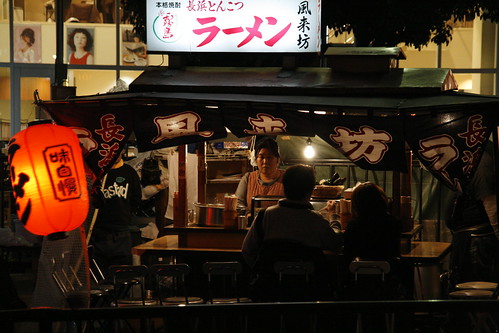
Food stalls
Asian noodling.
 
Last year Korea was trusting the world music charts with a Psy-chedelic tune that was all the more representative of the emancipation and internationalisation of the country, let alone region. I have personally never been to the Country of the Calm Morning, but have done a few immersions in the broader eastern region. If I loved walking the unspoilt Burmese countryside, the constant smile of the Malaysian people, the spices of the thailandese food... It is really Japan that caught my imagination, like no other (as Sony once said in its advertising).

I belong to the generation X, which means that I have grown up with the rise of that nation on the international scene. Sega and Nintendo have kept me awake at night ; Shizuo Koizumi and his anime "Attacker Yu!" (Jeanne & Serge in French) made me discover volley ball and live magnificent moments with great fellows ; I have delightfully seen sushi bars take over France restaurant scene like Pizzerias did in the 70s, Vietnamese restaurants in the 80s, Kebab shop in the 90s... It was therefore natural for my wife and I to aim for the archipelago when evaluating our honey moon destinations.

Nippon Style.

It was already a few years back, and I have written a few articles on that experience, but what I recall most is this frenetic calm that tears appart that nation. On the one hand Tokyo and its always-on beats, strobe lights and capsule hôtels, and on the other hand the traditions and relaxing nature of the Takayama region.

And it is always a pleasure to dive back in these fantastic memories through the pictures I brought back, or thought more serendipity. The latest happy accident was this advertisement for the Touchwood SH-08C, a very special phone by Sharp and launched by NTT Domoco.

As introduced in Engadget:
Kenjiro Matsuo was responsible for the creation of the instrument, while Morihiro Harano is being handed credit for the idea itself; in fact, he confirmed to The New York Times that no artificial music was added whatsoever, with only the background levels being adjusted up for effect. You may have never listened to a piece of classical music in your life, but you're sorely missing out if you ignore Bach's Cantata 147, "Jesu, Joy of Man's Desiring." Or, at least the version in that video below.

13.4.13

But why?

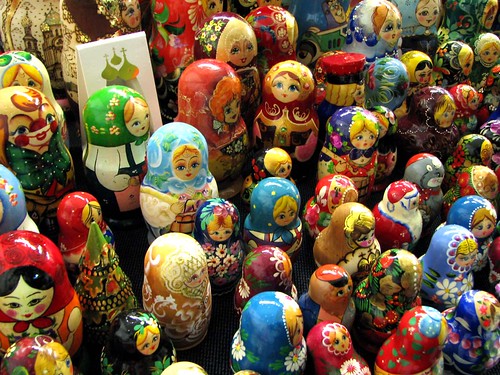
Russian Dolls

Precision questioning: the joy of parenthood.

As you may know, I am the lucky dad of a 3-year old boy. At that age, after the so-called Terrible 2's, it is supposed to be a delight to raise a child: as he is old enough to interact and understand, but still sufficiently young to avoid demonstrating rebellious attitudes. On paper, the ideal. but what this paper's small prints hide from you is that there is still some maintenance to that presumably well-oiled machine. And the keyword is "why?".

Kids want to make sense of their surroundings, of the words, of the people, of philosophical topics and astronomical phenomenons, of the weather, of the behaviour and social conventions... Each of these items is like an endless Russian doll: you start by answering a first seemingly easy question, and it triggers another one, that will raise another one, and another one... After the twentieth interrogations your rational adult brain is no longer able to get the thread of thoughts that led you to answer "why clouds are white?" whilst the conversation started on "what was a can opener?"!

Along the process, you try your best to provide answers that make sense, and keep you on the glorious altar your child puts you on. You are the source of truth. You are a well of wisdom. You are the equal to Aesop, Plato, Homer, Nietzsche, Kant... At least in their eyes, and you certainly don't want to contradict them (it feels so good). But frankly, sometimes their questioning skills are such that you reach the end of your knowledge, and most likely the end of your patience. And suddenly the answer gets less elaborate: "why is the..." he says, "because it's like that!" you interrupt.

Educational non-sense.

If children ask a ton of questions, my personal burden tallies to two tons... That is the curse of raising a bi-cultural kid. Two cultures, two languages, twice the fun. You not only need to handle the Why's but also the Pourquoi's. He clearly dissociates both cultures, so he naturally wants to make sense of twice more things but, to paraphrase Dr. Zeus' Oh, The Places You'll Go!, "sometimes they won't, because they don't".

Let's take the example of this famous nursery rhyme:
Hey diddle diddle,
The Cat and the fiddle,
The Cow jumped over the moon,
The little Dog laughed to see such fun,
And the Dish ran away with the Spoon
You have to reckon that such a infantine text, beyond the rhetorical rhymes is a gold mine for questioning children. How can a cow jump over the moon? Why is the dish running? Why our do plates do not run? Why a fiddle? Why? Why? WHYYYYY?

As a French, I have been educated with La Fontaine's fables and have learned that there is often a moral to what seems to be a light hearted text. So I looked hard at the text trying to find some sense myself from these lines. And since I could not, I started to check between the lines.

A long time ago, Bruno Bettelheim's The Uses of Enchantment: The Meaning and Importance of Fairy Tales opened my eyes to the hidden Freudian messages interwoven in Grimm's stories. So as my son was half asleep in his bed, I sat behind his bed, put a pipe in my mouth, and started to say "hmm, hmm...". Diddle? An alteration to Dildo, a phallic symbol? Maybe. The cat? Ok, that is the female symbol, that is straight forward. The cow over the moon? A sexist reference to the providing mother, and the happiness of breast-feeding? Well... I was clearly on the wrong path, and was glad that this thought process had only occurred in my brain and not verbalised to the now fast-asleep child. That would have pushed me down the altar for good.

To regain my pride, I looked at other cultural references and even cryptology. To no avail. Were these lines an acrostic, like The Beatles' Lucy in the Sky with Diamond song? No luck. In the end, I resolved myself to conclude that it may just be one of the famous British non-sense. That was not totally fulfilling an outcome, but quite handy. I could indeed blame my host culture for teaching non-sense to generations of future Eton graduates. Because of course on the other side of the Channel, obviously, we are way better. Aren't we?

Absurdity united

My mind is filled with French songs gathered during my own childhood, but frankly my Why-years are so far behind that I have not questioned or even listed to their lyrics for a very long time. But doing so, it revealed that absurdity was a shared value in nursery times:
Maman, les petits bateaux 

French lyricsEnglish translation
Maman, les petits bateauxMum, do small boats
Ont-ils des jambes?Have legs?
Mais oui mon gros betaOf course, you silly,
S'ils n'en avaient pas,If they hadn't,
Ils ne marcheraient pas!They couldn't walk!
Not only is the child almost bullied by his mother, but seriously what does that song mean? Why would a mother assert that boats are legged? Why? Why? I was suddenly regressing to my 3rd year on Earth. And my convictions collapsed.

If our childhood is nothing but nonsense, how are we supposed to build our psyche? Maybe our children are right in questioning us... After all, the French idiom says that the "truth comes out of children's mouth". So from now on, I give my little one an even greater attention when he turns back to me with his interrogations. I am more patient with the real Plato of the household.

12.11.11

The Saturday Shot #20: dead leaves

For this week contribution, it was hard to avoid the fact that London is nowadays covered in leaves... Orange, red, brown tones which are reminding me this brilliant trip we made in Japan a few years back. This same scenery is also a nostalgic glance back at my home country. France's contemporary culture has two important contributors in my eyes, the french surrealist poet Jacques Prévert and singer-actor Yves Montand.

Both contributed to one of my favourite old song of the French repertoire: "Les Feuilles Mortes" or "Autumn Leaves" in English. It is a 1945 French song with music by Joseph Kosma that Yves Montand introduced in 1946 in the film "Les Portes de la Nuit". And I just love it... Hope you'll enjoy it too!

<><><><><><><><><><><><><><><><><><><><><><><><><><><>
Les Feuilles Mortes Jacques Prévert - 1945
In French
...and in English (personal translation)
Oh ! je voudrais tant que tu te souviennes
Des jours heureux où nous étions amis.
En ce temps-là la vie était plus belle,
Et le soleil plus brûlant qu'aujourd'hui.
Les feuilles mortes se ramassent à la pelle.
Tu vois, je n'ai pas oublié...
Les feuilles mortes se ramassent à la pelle,
Les souvenirs et les regrets aussi
Et le vent du nord les emporte
Dans la nuit froide de l'oubli.
Tu vois, je n'ai pas oublié
La chanson que tu me chantais.

[Refrain:]
C'est une chanson qui nous ressemble.
Toi, tu m'aimais et je t'aimais
Et nous vivions tous deux ensemble,
Toi qui m'aimais, moi qui t'aimais.
Mais la vie sépare ceux qui s'aiment,
Tout doucement, sans faire de bruit
Et la mer efface sur le sable
Les pas des amants désunis.

Les feuilles mortes se ramassent à la pelle,
Les souvenirs et les regrets aussi
Mais mon amour silencieux et fidèle
Sourit toujours et remercie la vie.
Je t'aimais tant, tu étais si jolie.
Comment veux-tu que je t'oublie ?
En ce temps-là, la vie était plus belle
Et le soleil plus brûlant qu'aujourd'hui.
Tu étais ma plus douce amie
Mais je n'ai que faire des regrets
Et la chanson que tu chantais,
Toujours, toujours je l'entendrai !

[Refrain]
Oh! I wish you could remember
The happy days when we were friends.
In these days life was more beautiful,
And the sun burning more than today.
Autumn leaves are collected by shovels.
You see, I have not forgotten...
Autumn leaves are collected by shovels,
Memories and regrets too.
And the Northern wind blows them away
In the cold night of oblivion.
You see, I have not forgotten
That song you sang me.

[Refrain:]
This is a song which sounds like us.
You loved me, and I loved you
And both of us lived together,
You who loved me, me who loved you.
But life separates those who love,
Softly, without a noise
And the sea erases on the sand
The steps of divided lovers.

Autumn leaves are collected by shovels,
Memories and regrets too
But my quiet and faithful love
Keeps on smiling and thanks life
I loved you so much, you were so pretty.
How could I ever forget you?
In these days, life was more beautiful
And the sun burning more than today.
You were my tenderest friend
And I could not care less about regrets
That song you sang,
Always, always I will hear it!

[ Refrain: ]

21.5.11

The Saturday Shot #17: the wall

This weekend I felt a bit rock and roll...

After months avoiding Notting Hill, my Belle and I decided to pay a visit to Portobello road. And there it was like a Fly on a Wall. No, not the expected power plug delivering AC/DC, but a tape sealed in the Wall. I initially found that an interesting type of street art, quite a novelty to me. And yet, according to Hans Christian Andersen (1805-1875) "Where words fail, music speaks." so no wonder that a a tape could replace the good old graffiti.


To read further:

  • Bunn-invasion, article about French street artist Space Invader
  • Found it, or how to open your eyes to art in the street around you